Brake components
Inspect magnets, shoes or pads, related hardware, and visible wear. Drum- and disc-brake systems require different checks.
Preventive Trailer Service
Understand the brake and wheel-end checks that help identify wear before it becomes a roadside problem.
Preventive Service
Trailer brakes and wheel-end components work together every time you slow the rig. Magnets, shoes or pads, hubs, drums or rotors, bearings, seals, wiring, hydraulics, and the breakaway system can all affect braking performance.
Ramblin’ Man RV’s certified technicians inspect and service towable RV brake and wheel-end systems at rallies and other safe, permitted mobile locations. The goal is to identify wear, adjustment needs, damage, or lubrication concerns before they become a roadside problem.
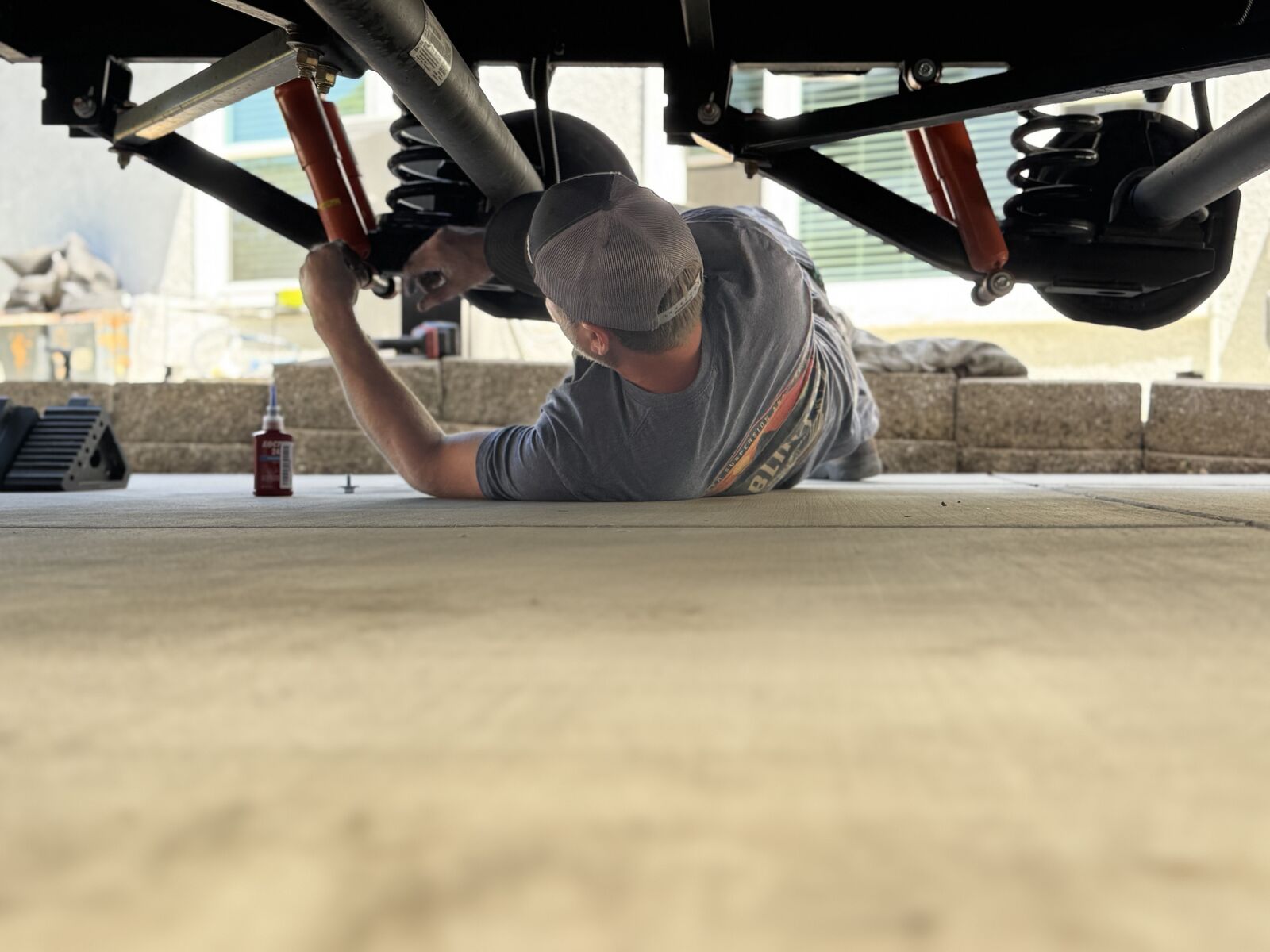
Maintenance Scope
Inspect magnets, shoes or pads, related hardware, and visible wear. Drum- and disc-brake systems require different checks.
Look for wear, heat evidence, contamination, damage, and conditions that may affect braking or safe wheel-end operation.
Check brake adjustment where applicable and confirm the system responds as expected after service.
Test the breakaway battery and related components so the emergency system is not overlooked during routine maintenance.
Clean and inspect conventional serviceable bearings, repack them when appropriate, and install new grease seals during a repack.
Lubricate wet bolts and other accessible greaseable suspension points when included in the service and applicable to the trailer.
Bearing Repack Process
Maintenance or Repair?
Grinding, smoke, a burning odor, a wheel that is unusually hot, weak or uneven stopping, a hydraulic-fluid leak, or a brake-controller warning calls for a problem-focused inspection. Routine maintenance is not a substitute for diagnosing an active safety concern.
Common Questions
Maintenance may include brake-magnet inspection, hub and drum inspection, brake adjustment, breakaway battery testing, brake-shoe or pad evaluation, and related wheel-end checks. The exact work depends on the brake system and inspection findings.
Where applicable, the hub is removed; bearings are cleaned and inspected; serviceable bearings are repacked; new grease seals are installed; adjustment and end play are checked; and the assembly is reinstalled. Accessible greaseable suspension points may also be lubricated.
Use the trailer, axle, brake, and bearing manufacturers’ guidance and consider mileage, time, storage, water exposure, towing conditions, and maintenance history. If the history is unknown or a warning sign appears, arrange an inspection rather than waiting for a routine interval.
Yes. After wheel removal, lug nuts should be rechecked and retorqued after 50–100 miles. The normal Ramblin’ Man reminder is 120 ft-lb unless the technician specifies another value for the application.
Tell us about your trailer, what you are experiencing, and where it is safely parked. We will help identify the right next step.